
The Nomination of Kevin Warsh
A defining moment for monetary policy and market expectation
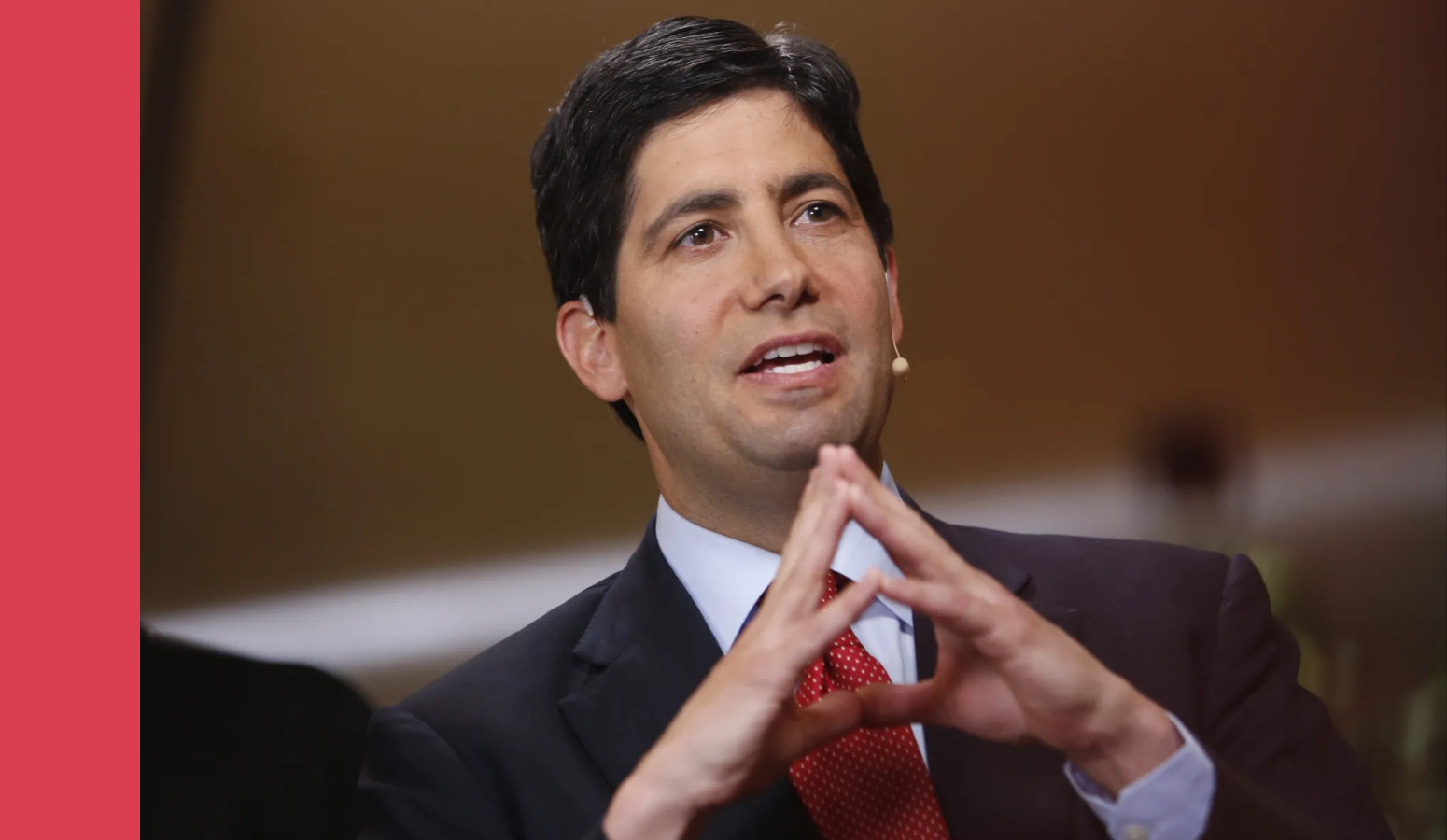
President Donald Trump announced the nomination of Kevin Warsh to become the next Chair of the Federal Reserve on January 30, 2026. If confirmed by the Senate, Warsh would succeed Jerome Powell when Powell’s term as Chair expires on May 15, 2026.
Leadership transitions at the Federal Reserve are rare and historically significant events. Since 1979, the Federal Reserve has had only five Chairs: Paul Volcker, Alan Greenspan, Ben Bernanke, Janet Yellen, and Jerome Powell. The appointment of a new Chair therefore represents a meaningful inflection point in monetary policy leadership and market expectations.
Warsh brings a distinct policy background to the role. He previously served as a Governor of the Federal Reserve during the Global Financial Crisis and has long been known as a critic of prolonged accommodative monetary policy and large central bank balance sheets. His nomination comes at a time when financial markets are navigating a delicate balance between moderating inflation, slowing but resilient economic growth, and evolving geopolitical risks.
For investors, the significance of the nomination lies less in immediate policy changes and more in the signals it sends regarding the future direction of monetary policy, institutional credibility, and the relationship between fiscal and monetary
Who Is Kevin Warsh?
Kevin Warsh previously served as a member of the Federal Reserve Board of Governors from 2006 through 2011. He was appointed by President George W. Bush at the age of 35, making him one of the youngest individuals ever to serve in that role. His tenure included the most turbulent phase of the Global Financial Crisis, which shaped many of his views on central bank policy.Warsh is widely viewed as a policy hawk with a strong focus on inflation control and institutional credibility. During the years following the financial crisis, he became increasingly critical of the Federal Reserve’s reliance on quantitative easing and prolonged periods of extremely low interest rates. His public commentary has often emphasized the importance of maintaining discipline in monetary policy and avoiding policies that could distort asset prices or encourage excessive financial risk taking.
Historically, Warsh argued that the Federal Reserve waited too long to normalize policy following the financial crisis and that sustained accommodation contributed to asset price inflation. In recent months, however, his public tone has evolved somewhat, with comments suggesting greater openness to rate reductions in the context of slowing inflation and moderating economic momentum.
This shift has attracted attention because President Trump has repeatedly advocated for lower interest rates. While Warsh’s historical policy views would traditionally align with tighter monetary conditions, his more recent commentary suggests a pragmatic willingness to adjust policy depending on the macroeconomic environment.
How Federal Reserve Policy is Actually Set
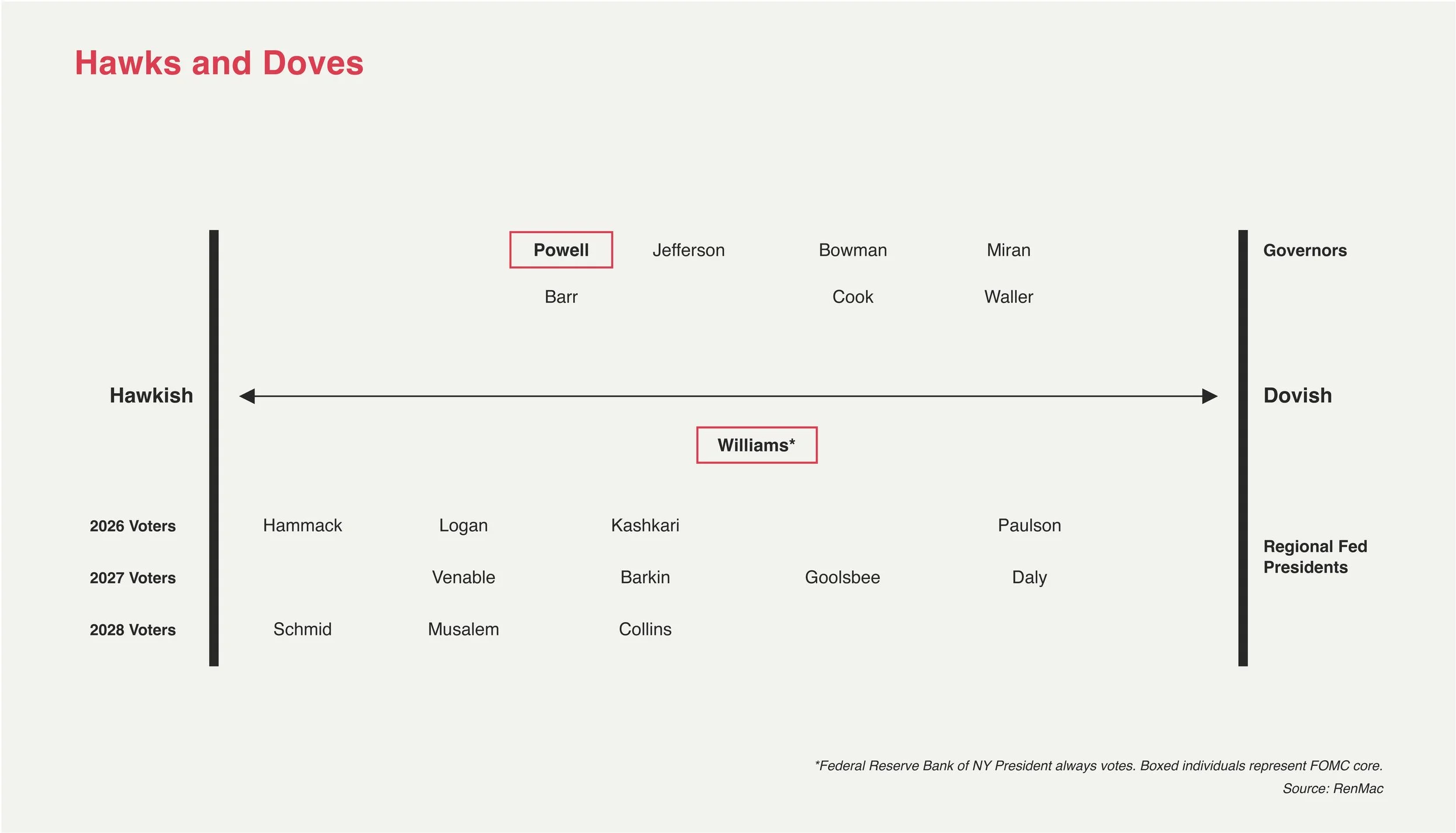
While the Chair of the Federal Reserve plays a highly visible and influential role, monetary policy is determined collectively through the Federal Open Market Committee (“FOMC”). The FOMC consists of the seven members of the Board of Governors along with a rotating group of regional Federal Reserve Bank presidents.
The committee structure is designed intentionally to promote consensus and to limit the influence of any single individual. Even a newly appointed Chair must persuade other members of the committee in order to implement meaningful policy changes.
That said, the Chair still holds substantial influence over the direction of policy. The Chair sets the tone of the committee’s discussions, shapes the communication strategy of the Federal Reserve, and serves as the primary voice guiding market expectations. Historically, Federal Reserve Chairs rarely dissent from the majority view of the committee, but they do play a critical role in forming that consensus.
If confirmed, Warsh would therefore inherit an institution where policy outcomes depend on collective decision making but where leadership credibility and communication remain extremely powerful tools.
The Senate Confirmation Process
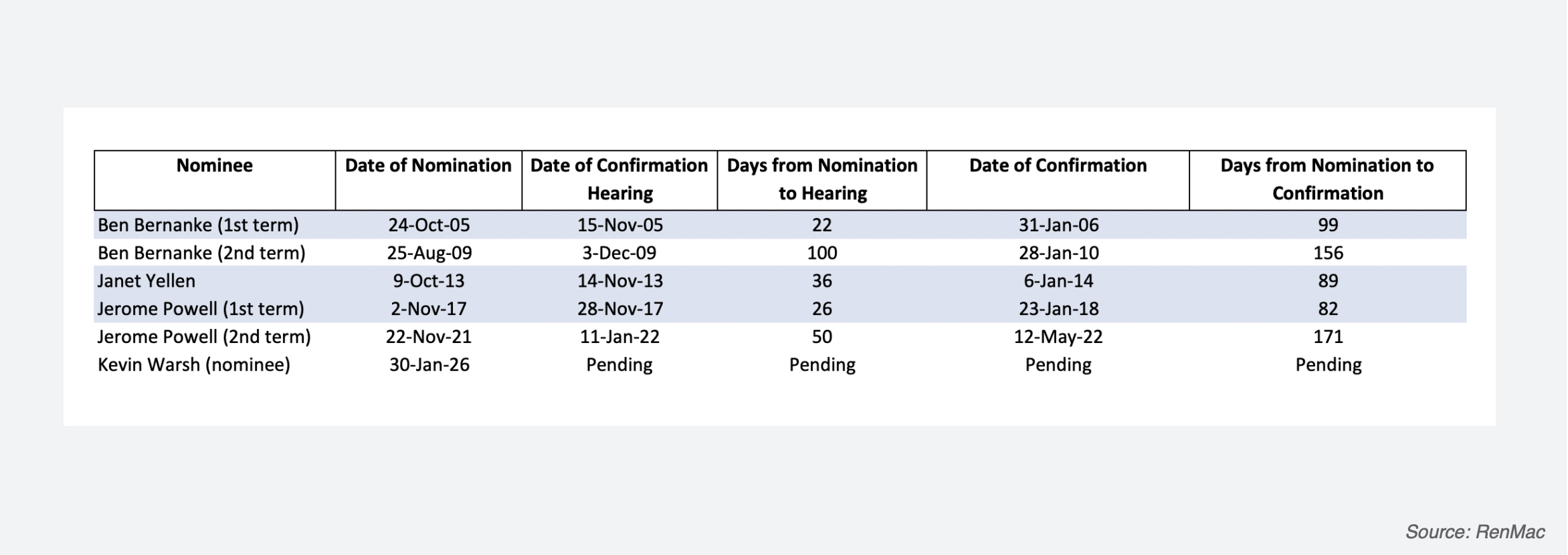
The nomination of a Federal Reserve Chair requires confirmation by the United States Senate. The process begins with a hearing before the Senate Banking Committee, where the nominee is questioned on monetary policy, financial regulation, and the strategic priorities of the Federal Reserve.
Following the hearing, the committee votes on whether to advance the nomination to the full Senate for confirmation. Final approval requires a simple majority vote.
The committee currently consists of a narrow Republican majority. While this suggests that the nomination is likely to advance, the process may still involve significant scrutiny. Monetary policy has become increasingly politicized in recent years, and senators frequently use confirmation hearings to challenge nominees on issues such as inflation control, banking regulation, financial stability, and the independence of the Federal Reserve.
Warsh previously underwent Senate confirmation in 2006 when he was appointed as a Federal Reserve Governor. At that time, his confirmation vote was overwhelmingly bipartisan. However, the political environment surrounding monetary policy today is far more contentious, and the questioning during the confirmation process is likely to reflect that shift.
One potential complication involves Senator Thom Tillis, who has indicated he may delay consideration of Federal Reserve nominations pending the resolution of a Department of Justice investigation related to current Federal Reserve leadership. While this does not necessarily prevent confirmation, it introduces procedural risk that could slow the timeline.
Why Confirmation Timing Matters for Markets
The most significant risk surrounding the nomination is not necessarily the policy direction of Kevin Warsh but the possibility of a prolonged confirmation process.
The Federal Reserve Chair plays a central role in policy coordination, communication, and signaling. Financial markets place enormous weight on the credibility and clarity of central bank leadership. If the confirmation process were to extend close to or beyond the expiration of Jerome Powell’s term in May 2026, markets could face a period of heightened uncertainty.
Several potential risks could arise from such a delay.
First, uncertainty regarding the future direction of monetary policy could increase volatility in interest rate markets. Investors would likely begin speculating about the future path of interest rates, balance sheet policy, and financial regulation.
Second, the Federal Reserve’s forward guidance could become less effective during a leadership transition. The institution’s communication strategy is one of its most powerful policy tools. If the leadership structure appears uncertain, investors may place less confidence in the guidance being provided.
Third, delays could amplify concerns about political pressure on the Federal Reserve. Even if the institution continues operating normally, the perception of political conflict surrounding central bank leadership can influence inflation expectations, Treasury yields, and currency markets.
Importantly, the operational structure of the Federal Reserve prevents sudden policy shifts during leadership transitions. Monetary policy decisions remain governed by the full committee. However, financial markets tend to react to perceptions of uncertainty even when the underlying policy framework remains stable.
The Question of Jerome Powell’s Future Role
An additional wrinkle in the transition involves the possibility that Jerome Powell could remain on the Federal Reserve Board of Governors after his term as Chair expires.
The Federal Reserve has two separate roles within its governance structure. Members of the Board of Governors serve fourteen year terms that are intentionally designed to span multiple presidential administrations. Jerome Powell’s term as a Governor extends until January 31, 2028. His leadership role as Chair, however, is a separate four year appointment that expires in May 2026.
Legally, Powell could step down as Chair while remaining on the Board of Governors as a voting member of the Federal Open Market Committee. This would allow him to continue participating in monetary policy decisions even after a new Chair assumes leadership.
In practice, this scenario is rare. Most former Chairs have chosen to resign once their leadership term ends in order to avoid complicated institutional dynamics. A former Chair serving under a newly appointed Chair could create the perception of internal disagreement or political tension within the Federal Reserve.
Some observers believe Powell might remain temporarily to reinforce institutional continuity and independence. Others argue that doing so could introduce unnecessary complexity into the leadership transition. Either outcome remains possible, although historical precedent suggests that most former Chairs ultimately step down from the Board when their leadership term ends.
Market Behavior During Federal Reserve Transitions
Leadership transitions at the Federal Reserve have historically been moments when financial markets test the credibility of the new Chair.
A notable example occurred in 1987 when Alan Greenspan had been in office for only a few weeks before the stock market crash known as Black Monday. While the event was not caused by the leadership change, it quickly became an early test of the Federal Reserve’s response under new leadership.
For this reason, market participants often pay close attention to the early months of a new Chair’s tenure. Investors evaluate how the new leader communicates policy priorities, manages market volatility, and navigates complex macroeconomic conditions.
If Warsh is confirmed, his early tenure could occur during a period of ongoing uncertainty around inflation, interest rate normalization, and global geopolitical risks. These conditions could create an environment in which markets closely scrutinize every signal coming from the Federal Reserve.

Investment Perspective
From an investment standpoint, leadership transitions at the Federal Reserve are important primarily because they shape expectations about policy credibility and communication. At this stage, the nomination of Kevin Warsh does not necessarily imply an immediate shift in monetary policy. The Federal Reserve operates as a committee, and policy decisions remain guided by incoming economic data and the collective judgment of the FOMC. However, the nomination does highlight several themes that investors should continue monitoring.
First, the balance between inflation control and economic growth remains central to the Federal Reserve’s decision making. Warsh’s historical emphasis on inflation credibility suggests a continued focus on maintaining discipline in monetary policy.
Second, the relationship between fiscal policy and monetary policy is becoming increasingly important. As government debt levels rise and political pressures around interest rates increase, the independence of the Federal Reserve will remain a key issue for financial markets.
Third, communication and credibility will continue to play a critical role in shaping market expectations. The Federal Reserve’s ability to guide interest rate expectations through clear communication remains one of its most powerful tools.
For long term investors, the most important takeaway is that while leadership changes can influence the tone of monetary policy, the institutional structure of the Federal Reserve provides significant continuity. Markets may experience short term volatility during transitions, but the underlying framework governing monetary policy remains stable.
Content in this material is for general information only and not intended to provide specific advice or recommendations for any individual. All performance referenced is historical and is no guarantee of future results.
All indices are unmanaged and may not be invested into directly. The economic forecasts set forth in this material may not develop as predicted.
